Fun & Misc
Stopwatch, Countdown Timer & World Clock
An online stopwatch with laps, a countdown timer with a chime, and a live world clock — all in one, running entirely in your browser with nothing to install.
Astronomy Picture of the Day is a free tool to view NASA's daily featured space image and its scientific explanation, directly in your browser.
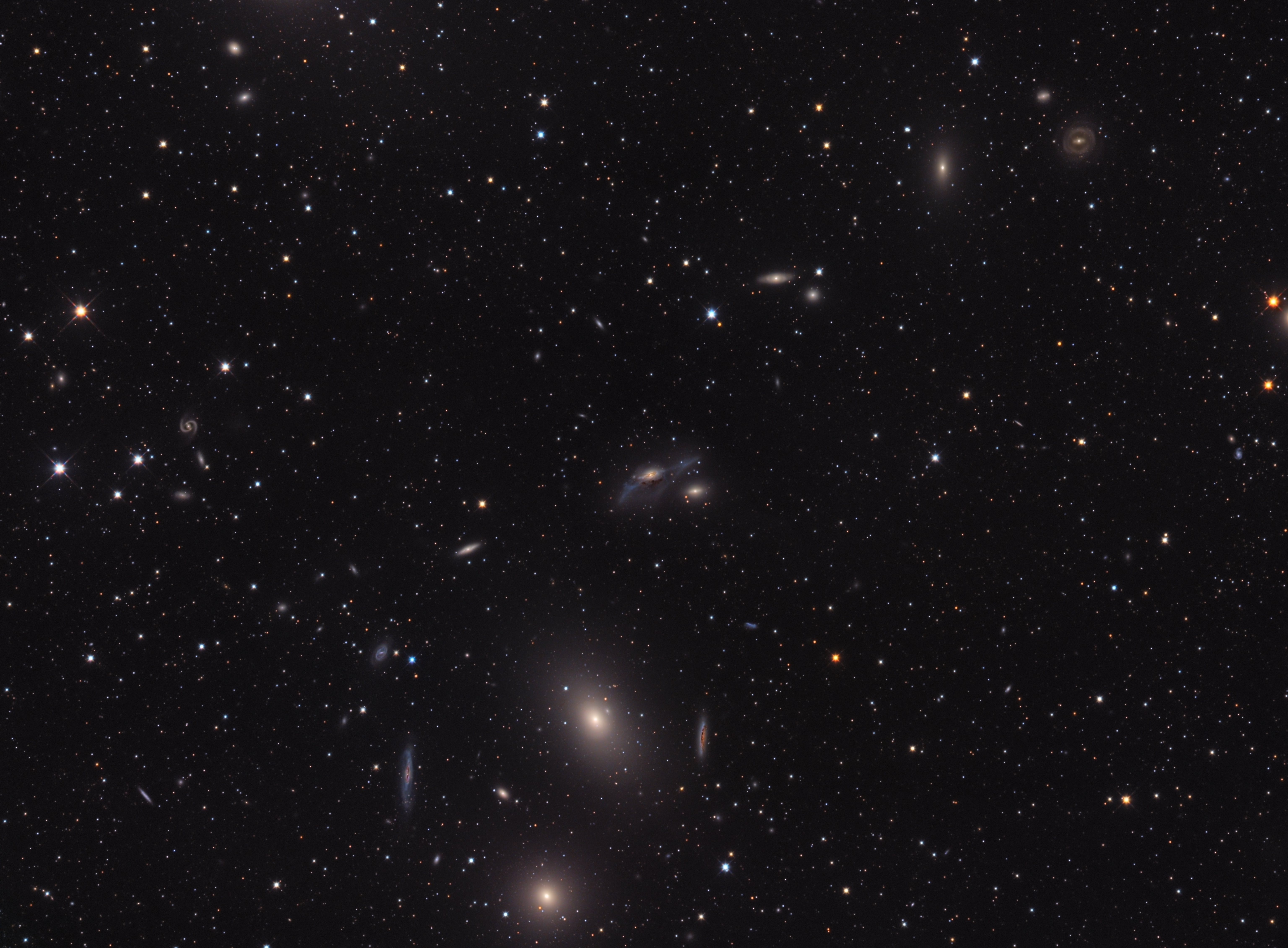
| Picture Title | Markarian's Chain |
| Date Taken | 2021-05-22 |
| Copyright | Ginge Anvik |
NASA has been publishing one astronomy image every single day since June 16, 1995. One image, every day, for decades, each one selected by professional astronomers and accompanied by an actual scientific explanation. It is genuinely one of the most underrated things on the internet, which is saying something because the internet is also full of cryptocurrency drama and SEO guides written by people who have never ranked anything.
This tool pulls the current NASA Astronomy Picture of the Day directly and displays it in your browser. No app download, no account creation, no newsletter subscription that promises cosmic insights and then sends you twelve promotional emails a week. Just the picture, the title, and the explanation. Clean and fast, which is apparently a radical concept.
The tool connects to NASA's official APOD API and retrieves the current day's featured image alongside its scientific description. Everything happens client-side in your browser. You are not uploading anything, logging into anything, or handing over your email address to see a picture of a nebula.
Here is how to use it:
That is the whole process. If you were expecting more steps, you may have spent too much time with enterprise software.
The range of images NASA features is genuinely impressive. On any given day you might get a close-up of a solar flare, a wide-angle photograph of the Milky Way above a desert, a Hubble image of a galaxy cluster from 13 billion years ago, or a surface photograph from one of the various rovers currently crawling around Mars. Occasionally the featured entry is a video rather than a static image, usually embedded from YouTube. The tool handles both formats. The descriptions are written by actual astronomers, not interns paraphrasing Wikipedia, which puts the writing quality somewhere above average for the internet.
The obvious use case is ""I enjoy looking at space,"" and that is a perfectly valid reason to open this tool. But there are a few practical applications that go slightly beyond simple curiosity.
Content creators and educators regularly use APOD images for classroom use, presentation backgrounds, or editorial illustration. NASA's images generally carry public domain status or specific usage terms, so check the individual image credits before publishing anything commercially. The written explanations are also solid reference material if you are writing about astronomy, physics, or space science and need a factually reliable starting point.
Developers and designers sometimes pull APOD images as high-quality placeholder assets during prototyping. If you are mocking up a layout and need a genuinely compelling hero image, a photograph of a pulsar or a comet transit is considerably more interesting than the usual placeholder services. For generated visual assets like color gradients, the PNG Gradient Background Generator handles that side of things, but when you need something with actual depth and visual scale, APOD is hard to beat.
There is also the case of using it as a daily reset. Starting the day with an image of the Andromeda Galaxy or a timelapse composite of aurora borealis has a way of recontextualizing whatever work problem felt catastrophic at nine in the morning. This is less a feature of the tool and more a side effect of seeing the universe at scale on a regular basis.
The NASA Astronomy Picture of the Day API is a public API maintained by NASA as part of its open data initiative. It returns the current day's featured image, its title, date, written explanation, and media type. The API is free to use and requires a standard API key for higher request volumes.
This tool handles the API call for you, so you do not need to configure credentials, read documentation, or understand what any of that means. It just works, which is the correct amount of effort required for looking at space pictures.
NASA publishes a new entry every single day, including weekends and public holidays, because the universe does not observe them either. Whatever you see when you open this tool is the current day's featured image, always fresh, always free, always from a source that employs actual rocket scientists.
If you are already using other tools on this site for content or development tasks, this tool slots in naturally as a break between steps. Say you are doing a round of metadata work, using the Meta Tags Extractor to audit a page, or cleaning up output with the JSON Formatter after pulling data from an API. One click on APOD, thirty seconds of looking at a star-forming region in the Carina Nebula, then back to work. It is a better use of thirty seconds than most things available at that price point.
For writers, pulling the APOD description into the Word Counter is a surprisingly useful exercise. NASA science communicators write concisely, pack in a lot of information per sentence, and keep reading time low. If you want a benchmark for what tight informational writing looks like, that is a reasonable one.
NASA's Astronomy Picture of the Day is a program run jointly by NASA and Michigan Technological University that features a new astronomy or space science image every single day, along with a brief written explanation by a professional astronomer. The program has run continuously since 1995 and covers everything from planetary surfaces to deep-field galaxy imagery.
Yes. No account, no registration, no usage cap. You open it, click the button, and the image loads. The underlying NASA API is also free for standard public use.
No. All processing is client-side. The tool sends a request to the NASA API, receives the image and description, and displays them in your browser. Nothing is logged or stored on this site's servers.
The NASA API occasionally experiences brief downtime. If the image does not appear on the first attempt, wait a moment and click the button again. If the problem persists, the NASA APOD website itself is the direct fallback.
An online stopwatch with laps, a countdown timer with a chime, and a live world clock — all in one, running entirely in your browser with nothing to install.
Free online Morse code translator. Convert text to Morse code and Morse code back to text live in your browser, then play it as audio beeps or a flashing light.
Free online countdown timer. Count down to any date and time or set a quick duration, with a live days-hours-minutes-seconds display and start, pause, and reset.
Generate random programmer jokes with a single click of a 'Generate' button. Have fun with jokes only programmers can understand!
Generate random quote of the day with a click of a button. Find most memorable quotes from notable person in the history.
Free online Pomodoro timer with a circular countdown, auto-advancing focus and break sessions, a session counter, a gentle chime, and a live browser-tab countdown.
Generate random life advice that you might find useful to improve the quality of your life with a single click of a button.
Free online coin flip and dice roller. Flip one or many coins and roll d4-d100 dice with fair crypto randomness, animation, tallies, and a roll history in your browser.
Free online typing speed test. Measure your WPM and accuracy in the browser with live per-character feedback, 15s, 30s, and 60s timed modes or a full-passage run.
Generate your next business idea or startup idea from thousands of available business ideas with a single generate button.
Generate random cat facts and find some funny and cute facts about cats along with their cute pictures with a single click of a button.
Generate anti-boredom activity with a single click of a button. Find the most useful activity you can do alone or with your friends.
Discover what happened today in history throughout the world, including key events in crime, politics, war, etc.
Free spin-the-wheel random picker. Enter options one per line, spin a colorful wheel of names on canvas, and land on a random winner — 100% in your browser.